



What is a RIB?
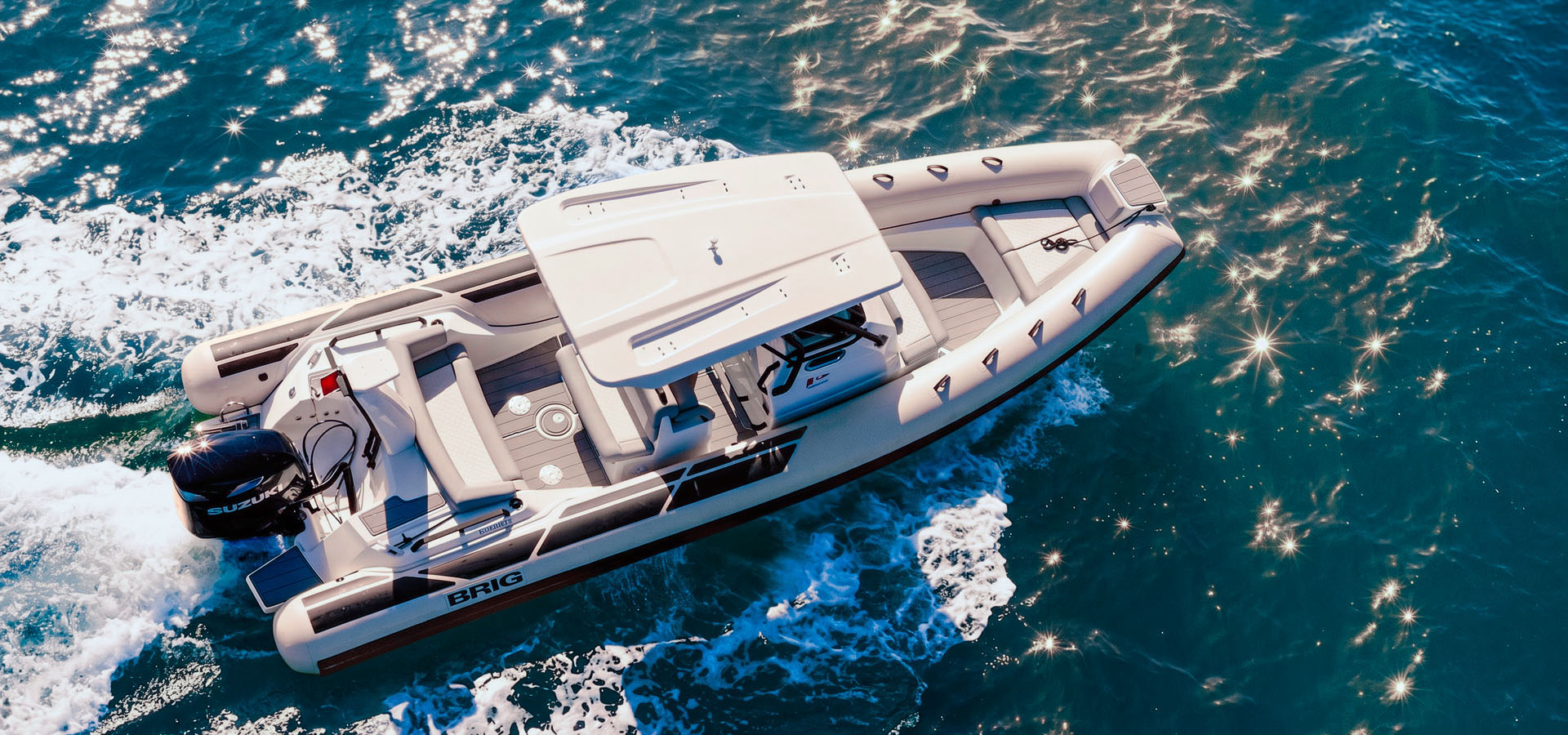
There was a time when saying “inflatable boat” was enough to make people picture a small rubber dinghy, a pair of plastic oars and somebody kneeling in it while desperately trying not to lose the air pump.
Those boats still have their place. But a modern Rigid Inflatable Boat, or RIB, is something rather different. It combines a rigid hull with inflatable tubes to create a boat that can be remarkably light, stable, responsive and versatile. The concept is simple enough to explain in one sentence. The interesting part is what happens when you start designing the two halves to work together.
And that is where RIBs become serious boats.
(Internal link: What Is a RIB? can eventually point to this article from the main RIB knowledge hub.)
So, what exactly is a RIB?
A RIB has two fundamental components. The first is the rigid hull — usually a shaped V-hull made from a composite material such as fibreglass, although aluminium is also used in the wider RIB industry.
The second is the inflatable collar, or tubes, running around the outside of the hull. The hull gives the boat its underwater shape, structural strength and much of its handling character. The tubes provide additional buoyancy, stability and a protective perimeter around the boat.
Put simply:
The hull does the serious underwater work.
The tubes make the whole package considerably more buoyant, stable and forgiving.
That combination is the defining idea behind a RIB.
{Technical cutaway illustration showing a RIB in simple cross-section: rigid V-shaped hull in the centre, inflatable tubes on either side, waterline, approximate buoyancy areas and passengers above. Minimal labels: “Rigid hull”, “Inflatable tubes”, “Buoyancy”, “Waterline”. Clean editorial infographic rather than a detailed engineering drawing.}
The current BRIG range follows this basic architecture across boats of very different sizes, from compact tenders to large recreational RIBs. (Internal link: BRIG Falcon range) (Internal link: BRIG Navigator range) (Internal link: BRIG Eagle range)
Why put inflatable tubes around a rigid hull?
Because each part solves a different problem. A conventional hard-sided boat has to create all of its buoyancy through the hull and structure of the boat. A RIB effectively adds a large amount of buoyant volume around the perimeter. This gives the boat a broad and stable platform while keeping the central hull relatively narrow and hydrodynamically efficient. The tubes also sit exactly where they are useful when manoeuvring around other boats, pontoons and beaches.
In other words, the inflatable collar isn’t there because someone thought it looked nautical. It has a job. Several jobs, actually.
The tubes are more than giant fenders
One of the first things people notice about a RIB is the inflatable tube. One of the last things they realise is how much it contributes to the boat’s behaviour. The tubes provide buoyancy high around the sides of the boat and can contribute significantly to stability, particularly when people are moving around onboard.
They also provide a degree of protection when coming alongside. This doesn’t mean a RIB should be driven into the marina like a bumper car. But if a tube happens to meet a pontoon before the hull does, everyone generally has a better afternoon.
That combination of buoyancy and protection is one reason RIBs became popular in professional applications where stability, manoeuvrability and robustness matter.
(Internal link: What Makes a RIB Stable?)
And then there is the hull
If the tubes are the most visually obvious part of a RIB, the hull is where much of its personality is created. Many performance RIBs use a deep-V hull. Instead of presenting a relatively flat surface to an incoming wave, the V-shaped hull meets the water at an angle. This helps the boat enter waves progressively and can produce a more controlled ride in choppy conditions.
Hull geometry is considerably more complicated than simply making the V deeper, of course. The designer has to balance ride comfort, stability, efficiency, acceleration, handling and structural requirements. The hull also has to work with the tubes, engine, passengers and equipment. Change one thing and several others may change with it. That is why two RIBs of exactly the same length can feel completely different on the water.
(Internal link: Why RIBs Ride So Well: Understanding the Deep-V Hull)
(Internal link: What Makes a RIB Fast? Hull Shape, Weight and Power Explained)
Why are RIBs so stable?
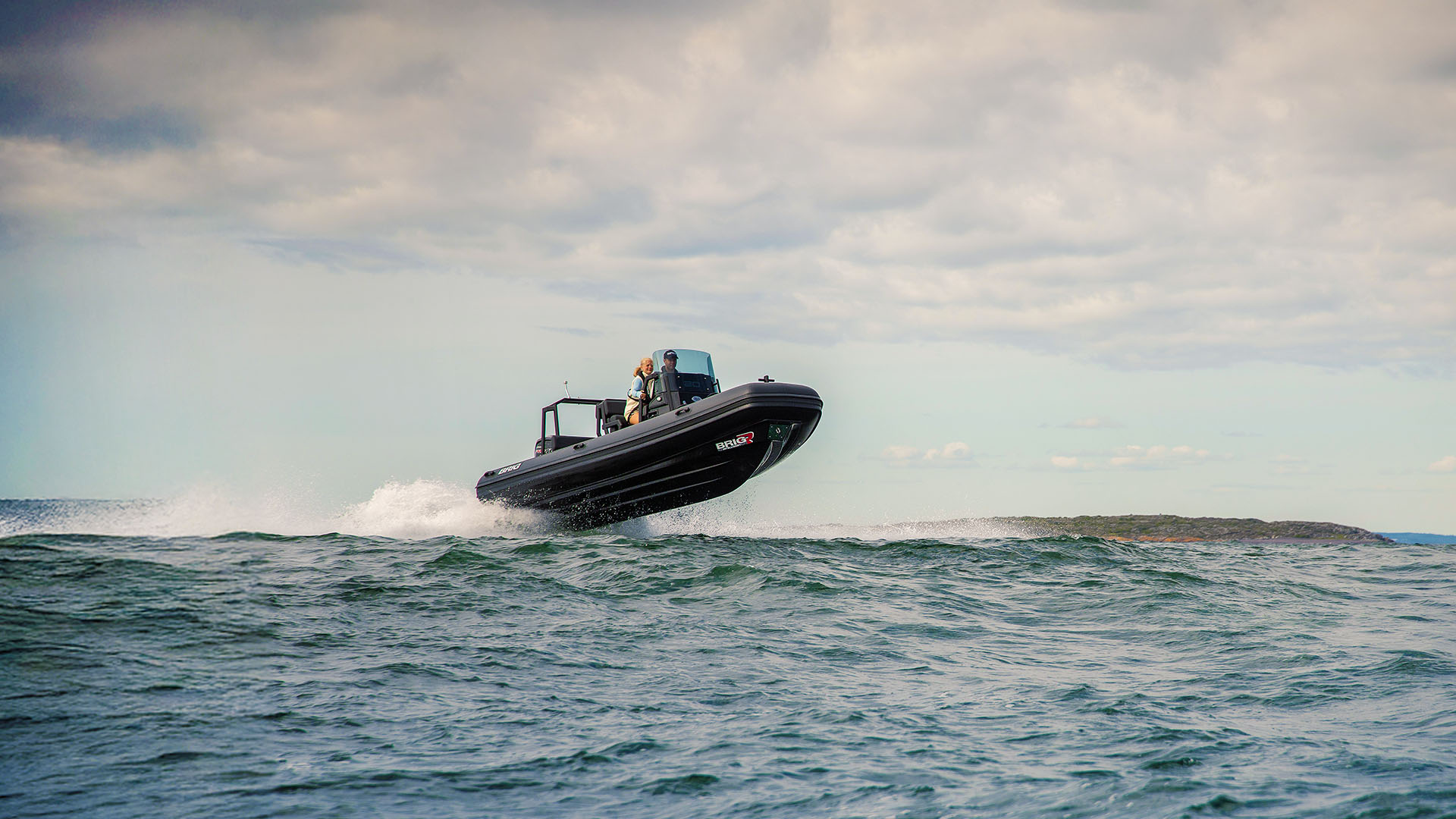
This is one of the category’s most useful characteristics. The inflatable tubes extend outwards from the rigid hull, creating additional buoyancy around the boat’s sides. That broad footprint can make a RIB feel reassuringly stable when people move around the deck. It is particularly useful when boarding, swimming, fishing, handling equipment or simply having several people standing up at once — which, mysteriously, is something families seem determined to do whenever you are trying to manoeuvre into a marina.
Of course, stability is a result of the entire boat’s design, not simply the presence of tubes. Hull geometry, beam, weight distribution, tube diameter, loading and centre of gravity all matter. A well-designed RIB is therefore a carefully balanced system rather than a rigid hull with an inflatable accessory attached to it.
[Ask BRIG Chief Engineer: “Which part of a BRIG’s stability do customers tend to notice without realising what is causing it?”]
(Internal link: What Makes a RIB Stable? The Science Behind the Tubes and Hull)
Are RIBs fast?
They can be. Very fast, in fact. But the important point is why.
The rigid hull provides the hydrodynamic shape needed for planing performance. The boat’s relatively low weight can also help produce a useful power-to-weight ratio. Once a planing RIB is moving efficiently, the hull carries much of the load while the tubes’ role in the water changes with speed, trim and loading. The result can be a boat that combines strong acceleration and responsive handling with the stability associated with the inflatable collar. But there is no magic “RIB speed”. The actual result depends on hull design, length, weight, engine power, propeller choice, loading and conditions.
So when someone says:“But surely an inflatable can’t be fast?” The technically correct answer is:
The inflatable part isn’t what makes it fast.
The rigid hull does.
(Internal link: What Makes a RIB Fast? Hull Shape, Weight and Power Explained)
(Internal link: How Much Power Does Your RIB Really Need?)
Why are RIBs often relatively light?
A RIB doesn’t need to build its entire topside structure as a solid hard-sided volume. The inflatable tubes provide substantial buoyancy without adding the same amount of structural material that a conventional hard-sided construction might require. That can help keep the overall boat relatively light for its size. And weight matters.
A lighter boat may require less power to achieve a given level of performance, can be easier to trailer or launch, and can be more responsive at the helm. It can also make a noticeable difference when a tender has to be lifted onto a yacht’s davits rather than simply driven into a marina berth. Of course, “light” is not automatically “better”. The boat still needs enough structure, strength and equipment for its intended use. The clever part is achieving the right balance.
(Internal link: RIB Weight Explained: Why Every Kilogram Matters)
RIBs aren’t all the same
This is another important point. “RIB” describes a construction concept, not a particular type of boating. A three-metre tender and a ten-metre offshore day boat can both be RIBs while having almost nothing else in common. Some are designed primarily for yacht tender duties. Others are built around family cruising. Some focus on performance. Others prioritise deck space, load carrying or versatility.
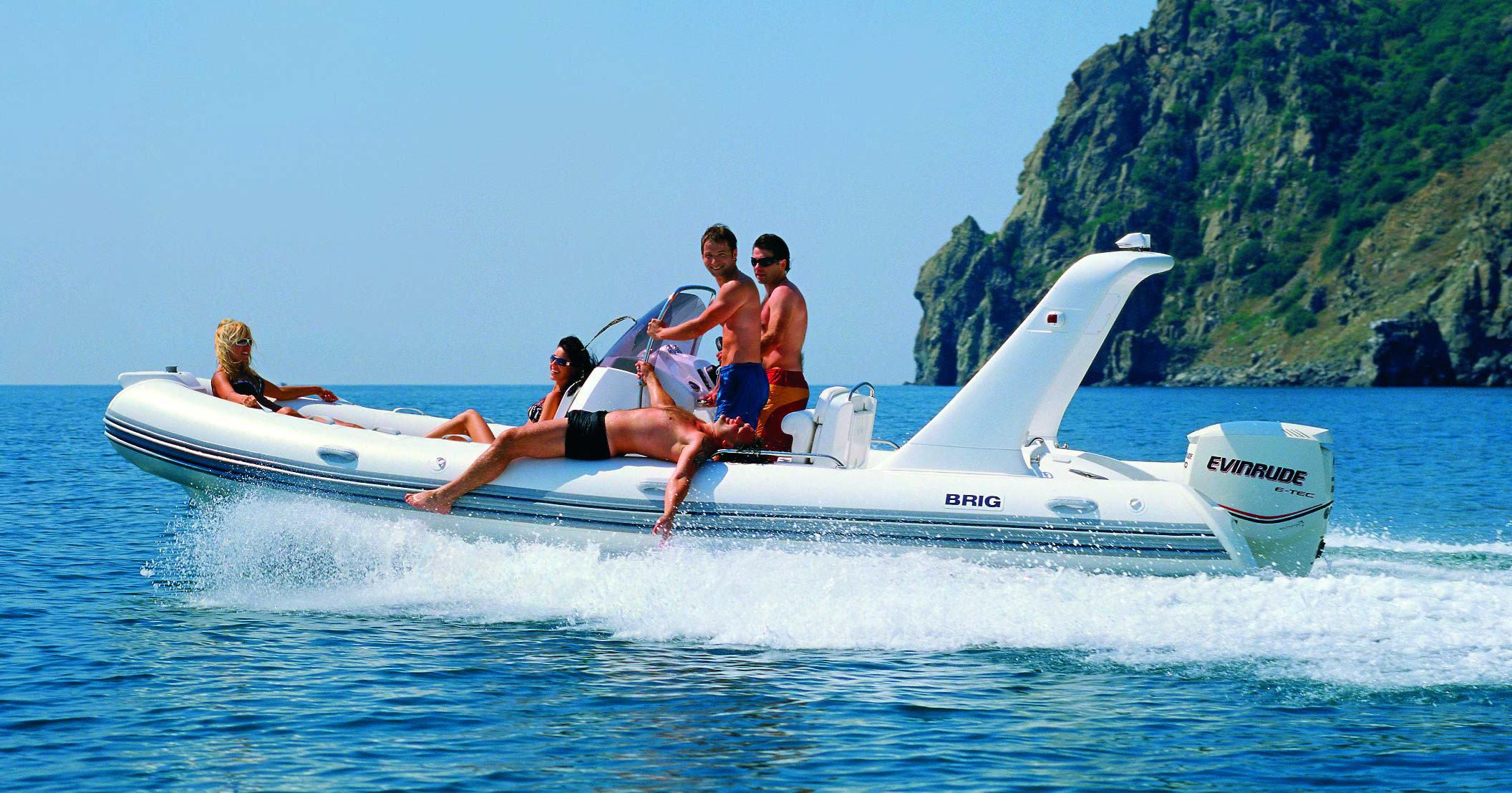
And larger recreational RIBs can become remarkably sophisticated boats, with comfortable seating, freshwater systems, refrigeration, audio, sunbathing areas and other equipment normally associated with much larger craft. That is one reason the category has grown so far beyond its early professional and tender roots.
(Internal link: How to Choose the Right RIB for Your Life on the Water)
{Wide lifestyle photograph of a larger BRIG RIB anchored in a sheltered Mediterranean bay, with several people naturally using the boat rather than posing for the camera. Show the open deck, seating, tubes and access to the water. The boat should feel like a genuine day boat rather than a yacht tender. Warm late-afternoon light, natural human activity, editorial travel-magazine aesthetic.}
What can you do with a RIB?
Quite a lot. A RIB can take people ashore from a yacht. It can take a family swimming. It can carry fishing equipment into a quiet bay. It can tow watersports equipment where the boat and engine are appropriately equipped for the job. It can explore coastlines, islands and beaches that larger boats cannot easily reach. It can spend the morning working as a tender and the afternoon behaving like a sports boat. And it can be sitting on a trailer on Friday evening and launching somewhere completely different on Saturday morning.
That versatility is one of the strongest arguments for the category. You don’t necessarily need a different boat for every different kind of day.
(Internal link: Beyond the Tender: What Can You Actually Do With a RIB?)
(Internal link: How to Choose a Yacht Tender: The Boat That Does the Real Work)
Are RIBs only for experienced boaters?
Not necessarily. Their responsiveness means that a new driver should still learn properly, understand the boat and respect the conditions. But the combination of good visibility, manoeuvrability, stability and forgiving tubes can make a RIB approachable for recreational boaters. The inflatable collar is particularly useful around docks and during boarding.
It is also reassuring when children are moving around the boat. None of this removes the need for sensible seamanship. A RIB is stable. It is not magical. Weather still exists. Waves still exist. And physics has yet to accept a compelling counterargument.
(Internal link: RIB Safety: The Habits That Make Good Boating Better)
What are RIB tubes made from?
This is where things get more interesting. RIB tubes are commonly made from materials such as PVC or CSM, often still casually called “Hypalon”. Hypalon was a DuPont trademark; the material commonly associated with the name is chlorosulfonated polyethylene, or CSM. Modern marine fabrics such as ORCA use CSM-based constructions designed for demanding inflatable applications. CSM is particularly valued for resistance to UV exposure, ageing, heat, hydrocarbons and abrasion. PVC has its own advantages and is widely used in inflatable boat construction.
Neither material should be reduced to “cheap” versus “premium”. The correct choice depends on how the boat will be used, where it will live and how it will be maintained.
(Internal link: PVC vs CSM/Hypalon: Which RIB Tube Material Is Right for You?)
(External link: ORCA — engineered fabrics for RIBs)
{Macro photograph of BRIG tube fabric showing the surface texture, seam and a section of the tube construction. The image should be tactile and detailed, with natural side lighting that reveals the material rather than a generic studio product shot. If available, photograph an actual BRIG tube during production or quality control.}
So why are RIBs so popular?
Because the basic idea works remarkably well. A rigid hull gives the boat shape, strength and hydrodynamic performance. Inflatable tubes provide additional buoyancy, stability and protection. The combination can produce a boat that is light enough to be practical, capable enough to be exciting and versatile enough to handle very different kinds of boating.
That is why the RIB has moved from specialist rescue and professional applications into yacht tendering, family boating, fishing, watersports and serious recreational cruising. And that is also why the best RIBs are much more than “inflatable boats”. They are boats in their own right.
The BRIG approach
At BRIG, the basic RIB formula has been developed into a complete design philosophy. BRIG says its boats are designed and built at its headquarters in Ukraine, with designers and engineers overseeing the process from design through construction and finishing. The company describes its boats as hand-built and places particular emphasis on engineering, materials and quality control.
The current range spans different boating roles rather than simply different lengths: from compact boats to larger Eagle and Navigator models designed around performance, cruising and social space. (Internal link: Explore the BRIG range)
That variety is important.Because ultimately, the question isn’t:
“Is a RIB a good boat?”
The better question is: “Is this RIB the right boat for the way I want to spend my time on the water?”
And that is where the next part of the journey begins.
(Internal link: How to Choose the Right RIB for Your Life on the Water)