



Choosing the size of a RIB often begins with a simple question: how many metres do you need?
It sounds straightforward, but length alone tells only part of the story. Two RIBs of similar size can offer very different amounts of usable space, seating, storage and comfort. Meanwhile, a larger boat may provide more capability but also introduce additional costs and practical considerations.
The right size depends on where you plan to use the boat, how many people normally come aboard, how far you intend to travel and how you will store and maintain it.
Rather than starting with the largest RIB your budget allows, it is usually more useful to begin with the activities you enjoy and work out how much boat those activities genuinely require.
Size means more than overall length
Length is the most familiar measurement used to describe a boat, but it is not the only dimension that affects how spacious or capable a RIB feels.
Beam, tube diameter, hull shape and deck layout all influence the available space. The position of the console, seats and storage compartments can make a considerable difference to how the boat works in everyday use.
A RIB with a wide beam and an efficient layout may offer more usable deck space than a slightly longer boat with a narrower or more enclosed arrangement.
The distinction between overall length and internal space is particularly important with RIBs because the inflatable collar occupies part of the boat’s width and extends around its perimeter.
When comparing models, consider how the dimensions translate into actual seating, circulation space and storage rather than focusing only on the length printed in the brochure.
(Internal link: RIB Specifications Explained: How to Read the Numbers — forthcoming article.)
1. Small RIBs: convenient and versatile
Compact RIBs are often chosen for yacht tender duties, short coastal outings and situations where easy handling and storage are priorities.
Their relatively modest dimensions can make them convenient to launch, recover and manoeuvre in confined spaces. Depending on the model and equipment, they may also be suitable for trailer transport or storage in a garage.
Smaller RIBs can provide enjoyable boating for individuals, couples or small groups, particularly in sheltered waters and appropriate conditions.
However, the available space for passengers, equipment and storage is naturally more limited. The boat’s size and design may also influence its suitability for longer journeys or more exposed conditions.
For someone whose boating consists mainly of short trips, swimming stops and local exploration, a compact RIB may offer everything required without the additional complexity of a larger vessel.
The key is to choose a model whose capacity, layout and operating limits suit the intended use.
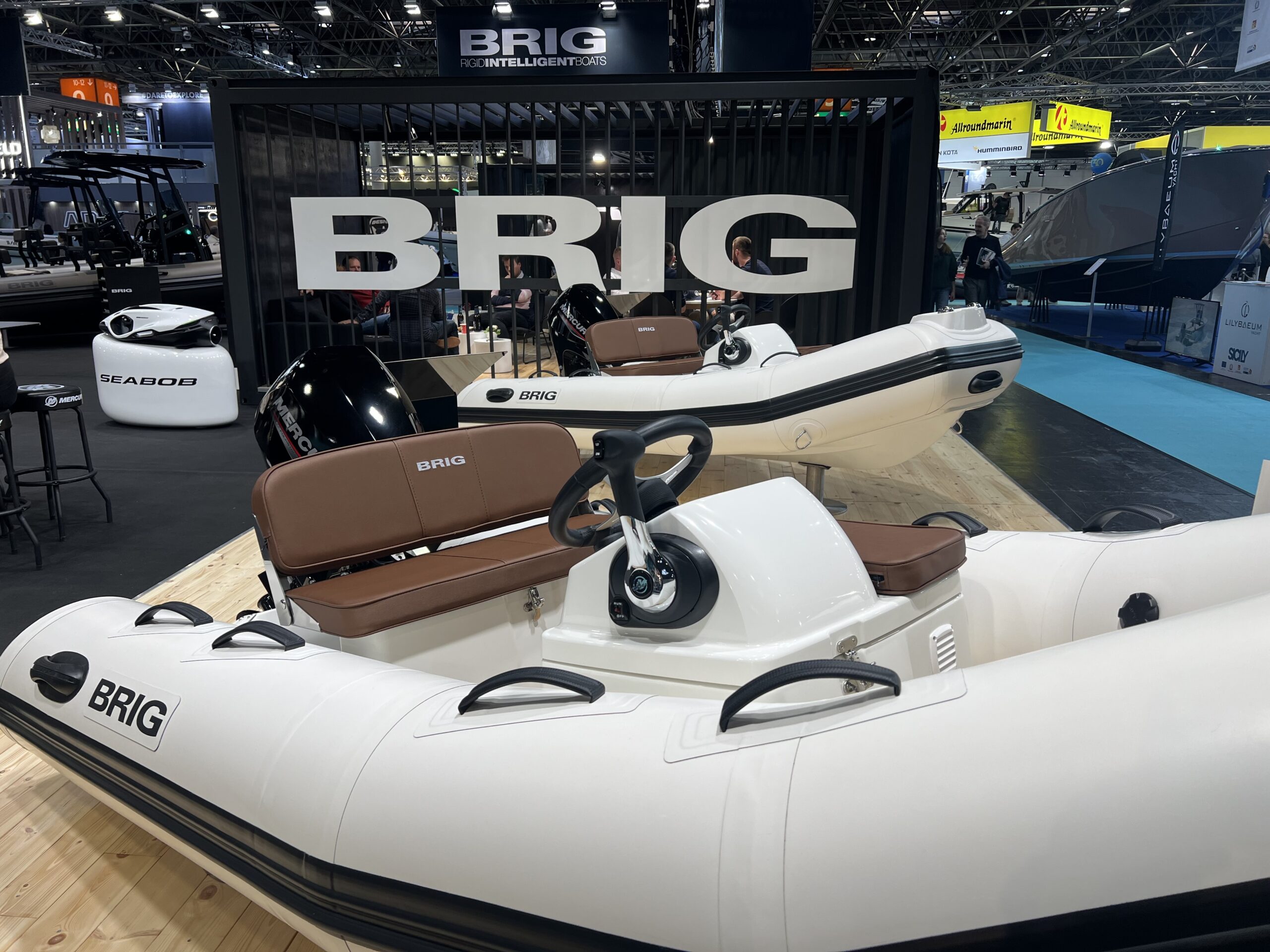
{Illustration: A compact BRIG RIB used as a tender or for a short coastal trip, with a small number of passengers aboard. The photograph should demonstrate practical use rather than maximum passenger capacity.}
2. Mid-sized RIBs: a balance of space and practicality
As RIBs become larger, they generally offer more opportunities for comfortable seating, storage and equipment.
This makes the middle of the recreational RIB market particularly interesting for owners who want a boat suitable for a range of activities.
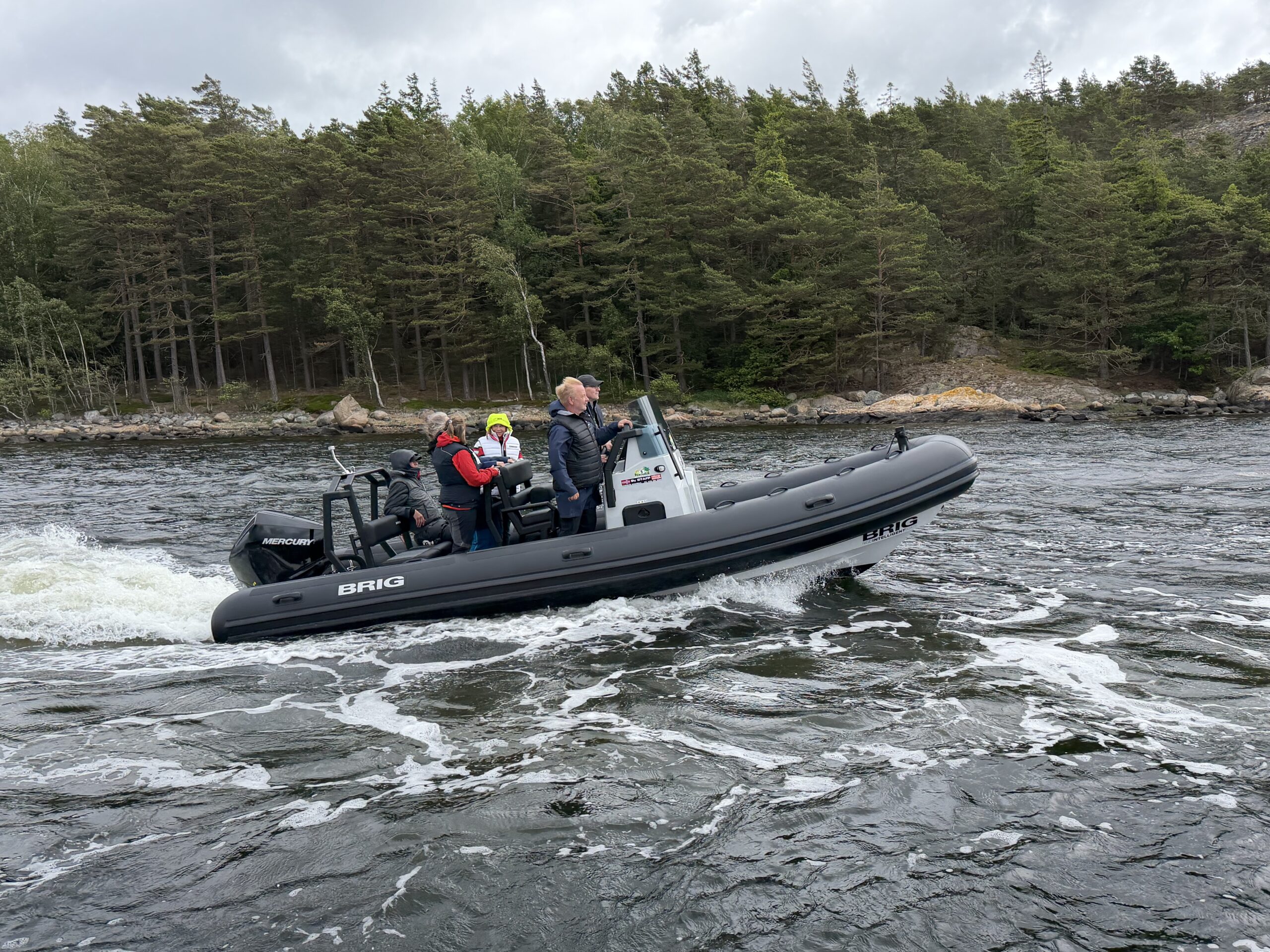
A mid-sized RIB may provide enough room for family outings, watersports, coastal cruising and occasional longer trips, while remaining manageable in terms of storage and everyday operation.
The exact balance depends on the model. Some designs prioritise open deck space and practical movement, while others incorporate more social seating, sunbathing areas and comfort features.
For many buyers, this is where the choice becomes less about whether the boat is large enough to perform a basic task and more about how comfortably it performs several different tasks.
It is worth comparing layouts carefully, because an additional half-metre of length does not always produce the same increase in usable space or comfort.
3. Larger RIBs: more space, more possibilities
Larger recreational RIBs can offer substantial seating areas, additional storage, more elaborate deck layouts and equipment that may not be practical on smaller boats.
They can be particularly attractive for owners who regularly cruise with family and friends, travel longer distances or want a boat that supports a full day on the water without feeling crowded.
Depending on the model, larger RIBs may offer features such as more extensive weather protection, larger sunbathing areas, additional seating configurations or facilities for longer outings.
However, greater size also brings practical considerations.
Mooring requirements, storage space, fuel consumption, servicing and handling arrangements may all become more demanding. A larger boat can also require more planning when approaching confined harbours or arranging transport.
The additional space is valuable when it supports activities you regularly enjoy. It is less useful if the boat becomes unnecessarily difficult or expensive to own.
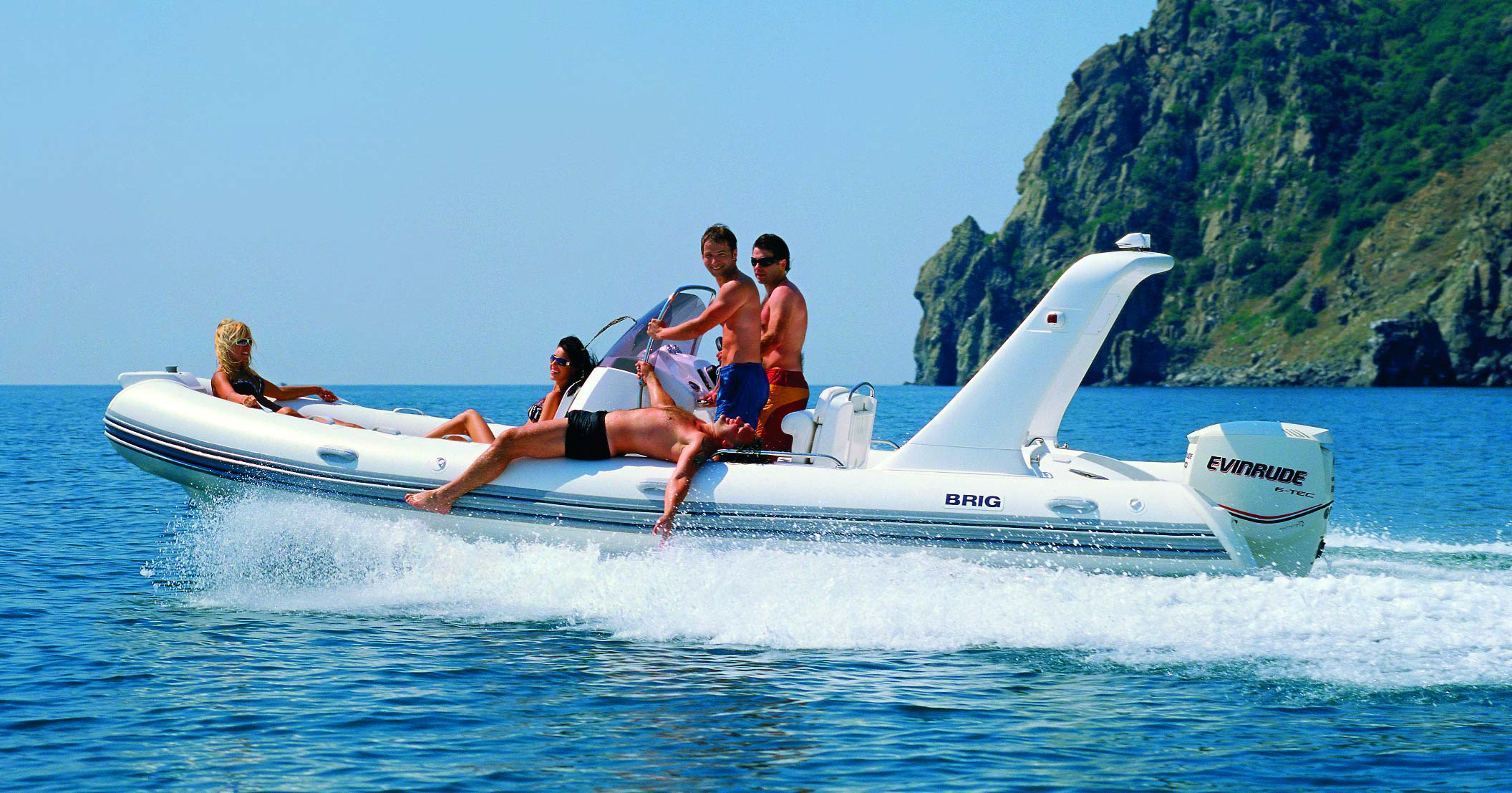
{Illustration: A larger BRIG recreational RIB underway with several passengers comfortably seated. Emphasise usable deck space and social layout rather than speed or luxury styling alone.}
4. How many people will normally be aboard?
Passenger numbers are one of the most useful starting points when choosing size.
However, it is important to distinguish between the maximum number of people a boat is permitted to carry and the number who can travel comfortably during a typical outing.
A manufacturer’s passenger-capacity figure is a limit determined under applicable requirements. It does not necessarily mean that every permitted passenger will have the same level of comfort or seating available for a long journey.
Think about your usual crew rather than only the largest group you might occasionally invite.
If you normally travel as a couple, a smaller RIB with a practical layout may be ideal. If you regularly take several family members or friends, additional seating and circulation space may be more important.
Also consider how passengers will use the boat. A short harbour transfer places different demands on seating and space from a full day involving cruising, swimming and meals aboard.
The best size is one that accommodates your normal group comfortably while remaining within the manufacturer’s loading and capacity limits.
5. How far do you want to travel?
The distances you intend to cover can influence the size and type of RIB that makes sense.
For short outings close to a familiar marina, a compact boat may be entirely suitable. Longer coastal journeys may place greater importance on fuel capacity, seating comfort, weather protection and storage.
Larger boats often provide more room for these features, but length alone does not determine range or offshore suitability.
Hull design, engine configuration, loading, fuel consumption and the conditions encountered all influence the boat’s practical operating capability.
A smaller, well-designed RIB may be suitable for certain coastal journeys, while a larger boat may still be inappropriate for particular conditions or routes.
When planning longer trips, consider the complete boat and its operating limits rather than relying on length as a substitute for capability.
(Internal link: How to Choose a RIB for Coastal and Offshore Boating — forthcoming article.)
6. Think about the waters you will use
The environment in which you normally operate is just as important as the distance you travel.
Sheltered lakes, bays and estuaries may allow a wide range of RIB sizes to be used comfortably in suitable conditions. Exposed coastlines and areas with challenging sea states can place greater demands on hull design, handling and crew experience.
A longer hull can behave differently in waves from a shorter one, but this does not mean that a particular length guarantees a comfortable or safe ride.
Hull geometry, weight distribution, speed, sea state and loading all influence the result.
The skipper’s decisions remain essential regardless of boat size. Conditions that are manageable for one vessel and crew may be unsuitable for another.
If you expect to operate regularly in more demanding waters, discuss your intended use with the manufacturer or an experienced local distributor and, where possible, arrange a sea trial in representative conditions.
7. Storage can determine the maximum practical size
A RIB may be perfectly suited to your boating plans but inconvenient to own if it does not fit your storage arrangements.
Before choosing a size, consider where the boat will spend most of its time.
A marina berth has dimensional and operational limits. A trailer requires a suitable towing vehicle, launching facilities and storage space. A yacht tender must fit within the parent vessel’s approved lifting and storage arrangements.
Garage storage introduces additional restrictions involving overall length, beam and height. The engine, trailer and optional equipment can all affect the space required.
Transport and towing regulations vary between countries, so the complete boat-and-trailer combination must be assessed against the applicable requirements.
A boat that fits comfortably into your normal storage and launching routine is often more enjoyable to own than one that requires complicated arrangements every time you want to use it.
(Internal links: RIB Storage: Trailer, Marina, Davits or Garage? and How to Choose a Yacht Tender — forthcoming and previously covered articles respectively.)
8. The effect of size on weight and engine power
As RIBs increase in size, their overall weight and propulsion requirements generally change as well.
However, the relationship is not perfectly proportional. Hull construction, equipment, engine choice and layout can produce substantial differences between boats of similar length.
A larger RIB may require more power to achieve its intended performance, particularly when carrying passengers and equipment. The engine installation must remain within the manufacturer’s approved specifications.
Weight also affects storage, towing, lifting and fuel consumption.
When comparing sizes, look at the complete boat configuration rather than the bare-hull weight. Consider the engine, fuel, battery, optional equipment and the normal operating load.
A slightly larger model may offer valuable extra space, but it is worth understanding what that means for the total weight and everyday operating costs.
(Internal links: RIB Weight Explained: Why Every Kilogram Matters and How Much Power Does Your RIB Really Need?)
9. Does a bigger RIB always ride better?
It is tempting to assume that a larger RIB will always provide a more comfortable ride.
Size can influence how a boat interacts with waves, and a longer hull may offer advantages in certain conditions. But comfort depends on more than length.
Hull geometry, deadrise, structural design, weight distribution, seating and speed all affect how passengers experience the journey.
A well-designed smaller RIB may provide a comfortable ride in conditions suited to its intended use, while a larger boat operated at an inappropriate speed may be uncomfortable.
The inflatable collar also contributes to the overall behaviour of a RIB, although its effect depends on the design and how it interacts with the water.
Rather than assuming that larger means better, compare the actual hull designs and, if possible, experience them underway.
(Internal links: Why RIBs Ride So Well: Understanding the Deep-V Hull and What Makes a RIB Stable? The Science Behind the Tubes and Hull.)
10. How size affects ownership costs
A larger boat usually brings additional costs, although the exact difference depends on the model and how it is used.
Purchase price, engine choice, fuel consumption, insurance, mooring, storage and maintenance may all change as boat size increases.
Some costs rise gradually, while others can increase more noticeably when a boat exceeds a particular storage, towing or marina category.
For example, moving to a larger RIB may require a different trailer, a more capable towing vehicle or a larger berth. These practical changes can be more significant than the difference in the boat’s purchase price.
It is therefore useful to compare the total ownership requirements of two sizes rather than focusing only on the initial cost.
A boat that fits comfortably within your budget and operating arrangements is more likely to be used regularly and enjoyed without unnecessary complications.
11. A practical guide to RIB size categories
There are no universally fixed categories that define what counts as a small, medium or large recreational RIB. The following ranges are intended only as broad illustrations.
| Approximate length | Common applications | Main considerations |
|---|---|---|
| Under 4 metres | Compact tenders, short local trips | Storage, portability, limited space |
| 4–5.5 metres | Tenders, small recreational RIBs | Layout, passenger comfort, transport |
| 5.5–7 metres | Family day boating, coastal cruising | Versatility, seating, storage |
| 7–9 metres | Larger day boats, extended coastal outings | Comfort, equipment, operating costs |
| Over 9 metres | Large recreational RIBs, longer outings | Mooring, handling, equipment, ownership requirements |
These categories overlap considerably. A boat’s actual suitability depends on its design, capacity, equipment and operating limits, not simply its length.
12. The questions that help you choose
Before deciding on a particular size, it helps to answer a few practical questions:
- How many people will normally be aboard?
- What activities will make up most of your boating?
- Will you mainly use sheltered waters or more exposed coastal areas?
- How far do you expect to travel on a typical outing?
- How much seating, storage and open deck space do you need?
- Where will the boat be stored and launched?
- Will you need to tow or lift it?
- What are the realistic ownership costs of each size?
- Have you compared the actual layouts of the models you are considering?
These questions can help narrow the choice before you begin comparing individual models and equipment packages.
Choose the size that makes boating easier
A larger RIB can offer more room, comfort and equipment, while a smaller one may be easier to store, transport and operate.
Neither is automatically the better choice.
The most suitable size is the one that provides enough space and capability for your normal activities without introducing unnecessary complications.
Think about your passengers, the waters you use, the distances you travel and the practicalities of ownership. Then compare the actual layouts and specifications of the boats that meet those needs.
A well-chosen RIB should feel large enough when you are using it and manageable enough when you are not. Finding that balance is usually more valuable than adding another metre simply because you can.